Showing posts with label Estuary Arts Centre. Show all posts

Friday, 19 August 2022

Kōkako Linocut - Song of Hope for Predator Free NZ 2050


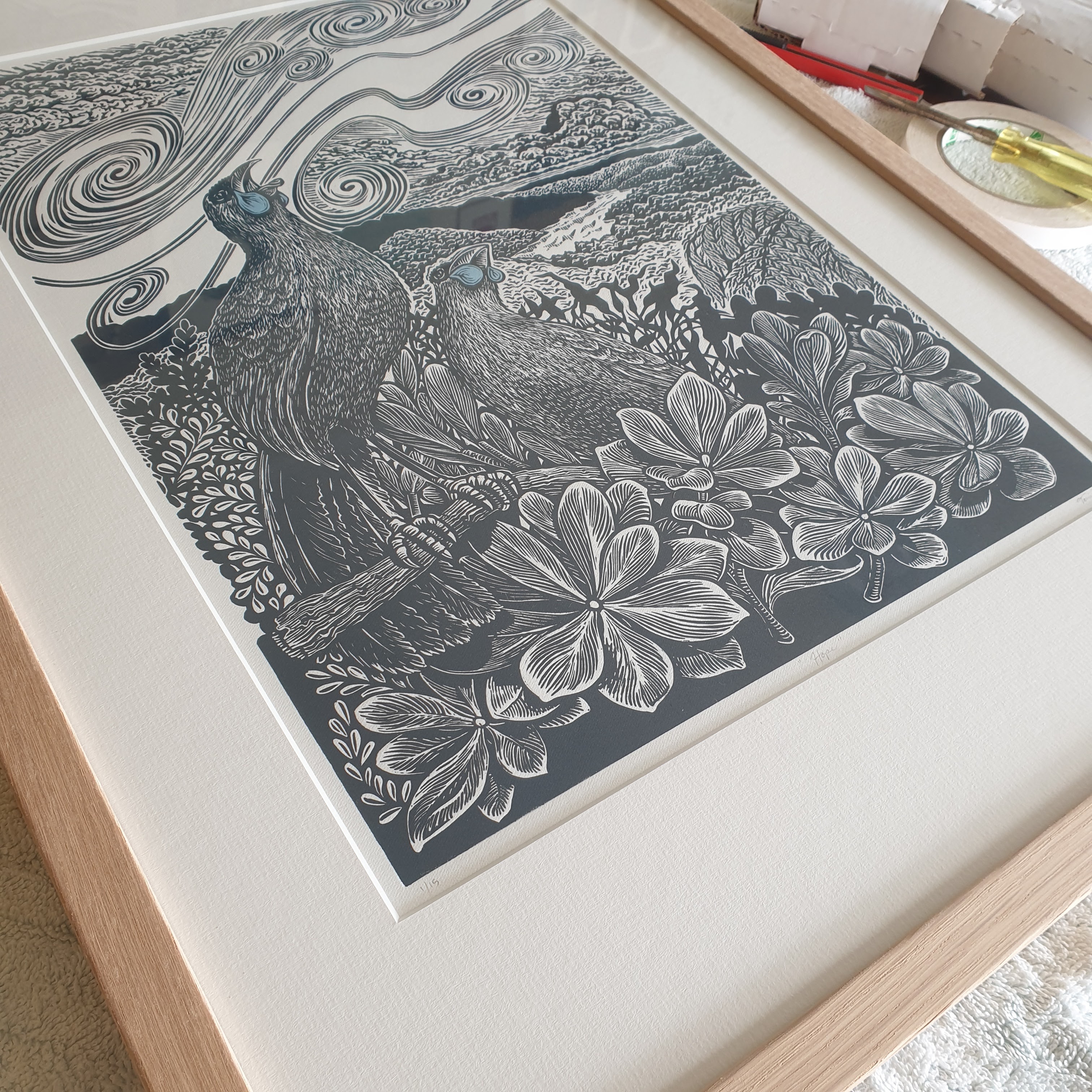
"Hope", Limited edition linocut, by Toni Hartill


My recent linocut "Hope", expressing the new found hope for the endangered North Island kōkako, will be exhibited as part of the Predator Free NZ 2050 exhibitions, opening soon in the Auckland region.


"Hope", Limited edition linocut, by Toni Hartill


“Hope”


Good news story: 

Record number of kōkako breeding pairs counted in the Hunua Ranges. 

At last, something to sing about!


A record number of 229 adult kōkako breeding pairs have been counted in the Hunua Ranges, as reported in June 2022*, up from 106 pairs in 2018, and just 25 birds in 1994!

While the idea of Aotearoa being “predator free” by 2050 seems like an incredibly lofty goal, this news is a strong sign of hope for the North Island kōkako, and, in turn, for many other native species. On closer inspection, the aim of the Predatorfree2050 campaign focuses on the elimination specifically of rats, possums and mustelids and thanks to the supreme efforts of dedicated volunteers and conservationists across the country, this goal is looking entirely achievable.

Feeling constantly harangued by endless “bad news” stories, this news rang out loud and clear as an absolute song of hope for the future.


FURTHER READING:


Stuff.co.nz: Kōkako Thriving in Auckland's Hunua Ranges, June 2022

"The targeted management area has been using 3000 bait stations and 200 traps a year, aimed at catching pests like possums, rats and mustelids..." 


NZGeographic: Kōkako

"With resurging numbers... conservationists are optimistic 
that their haunting song will again flood through the forests of the North Island." 


Scroll to the end of this post for more links on the progress 
being made to rebuild the kōkako population.


Predator Free NZ 2050


40 invited NZ artists are taking part in the 

Predator Free New Zealand 2050 exhibitions, 

planned and curated by Valerie Cuthbert, 

to highlight the progress and understanding 

of this incredible goal. 


Estuary Arts Centre

214B Hibiscus Coast Highway, Orewa


5th September - 2 October, 2022

Opening event: Sat 10th September, 3-5pm


&


Auckland Botanic Gardens

102 Hill Road, Manurewa


21 October - 14 November, 2022


The Making of HOPE


Trying to capture their song!


Carved "Hope" lino by Toni Hartill


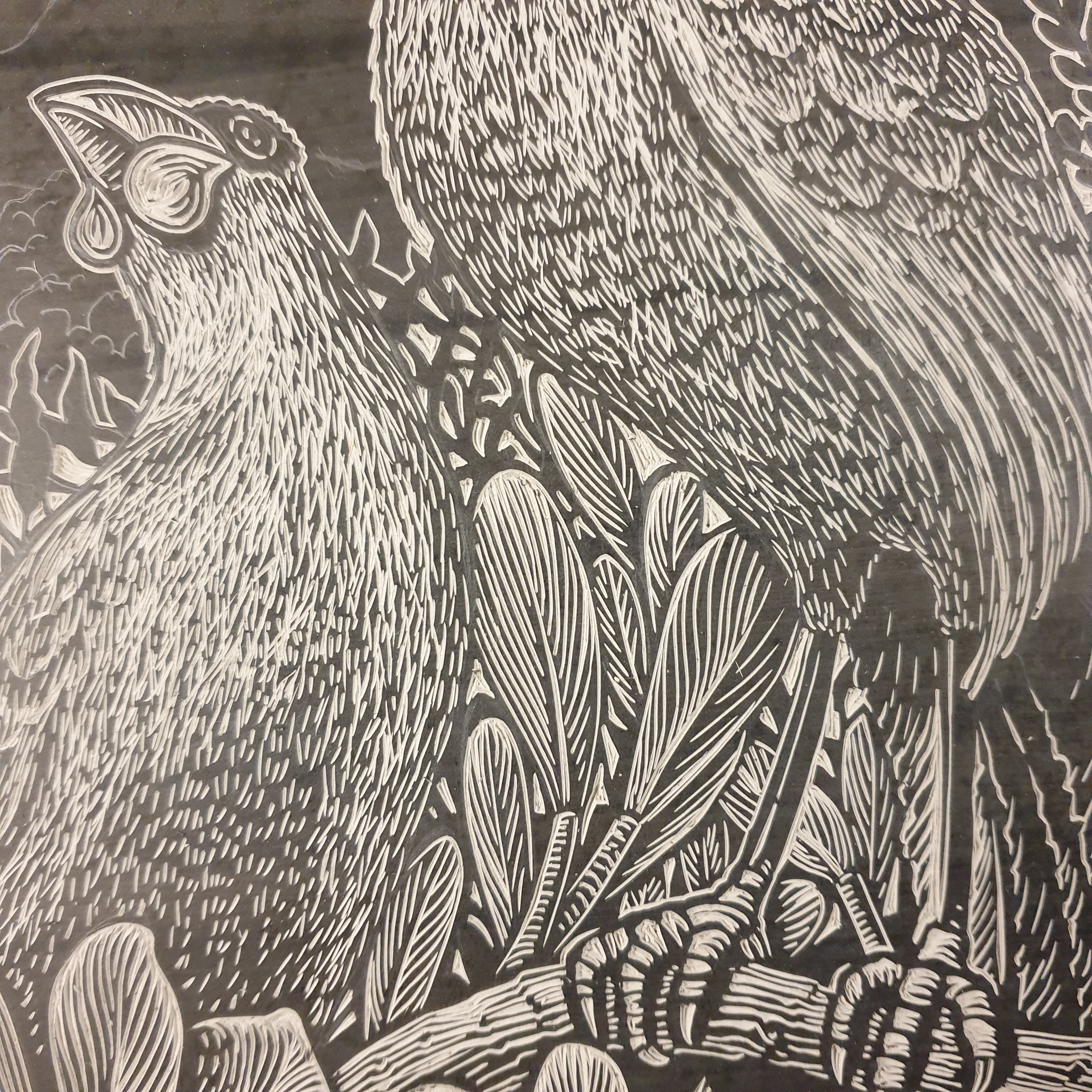
Once I decided to celebrate the success of the kōkako population in Auckland's Hunua Ranges, I really wanted to capture their song as this, along with their striking blue wattles, is what makes these beautiful birds so distinct. 


Detail of " Hope" linocut by Toni Hartill


It was been said that the kōkako has 


Detail of " Hope" linocut by Toni Hartill


I've been lucky enough to see and hear kōkako up close in the "wild" and they are truly enchanting. Not great fliers they tend to hop and glide through the forest using their strong, long legs to maintain forward momentum by springing off branches, while flapping their stumpy wings to maintain height. 


Carved "Hope" lino, in progress, by Toni Hartill


In designing my composition I perched a breeding pair amongst native flora,
overlooking Auckland's Hunua Ranges. 


Carved "Hope" lino, in progress, by Toni Hartill


Related to the long extinct and iconic Huia, to see these birds thrive and to rebuild their population is incredibly special and exciting. The work done to protect the kōkako is in turn helping other native species such as the kākā, tomtits, bellbirds, long-tiled bats and Hochstetters frogs which is wonderful indeed! 

All a reason for renewed hope for the future 
and to support the continuation of this incredibly important work.


Drawing & Researching


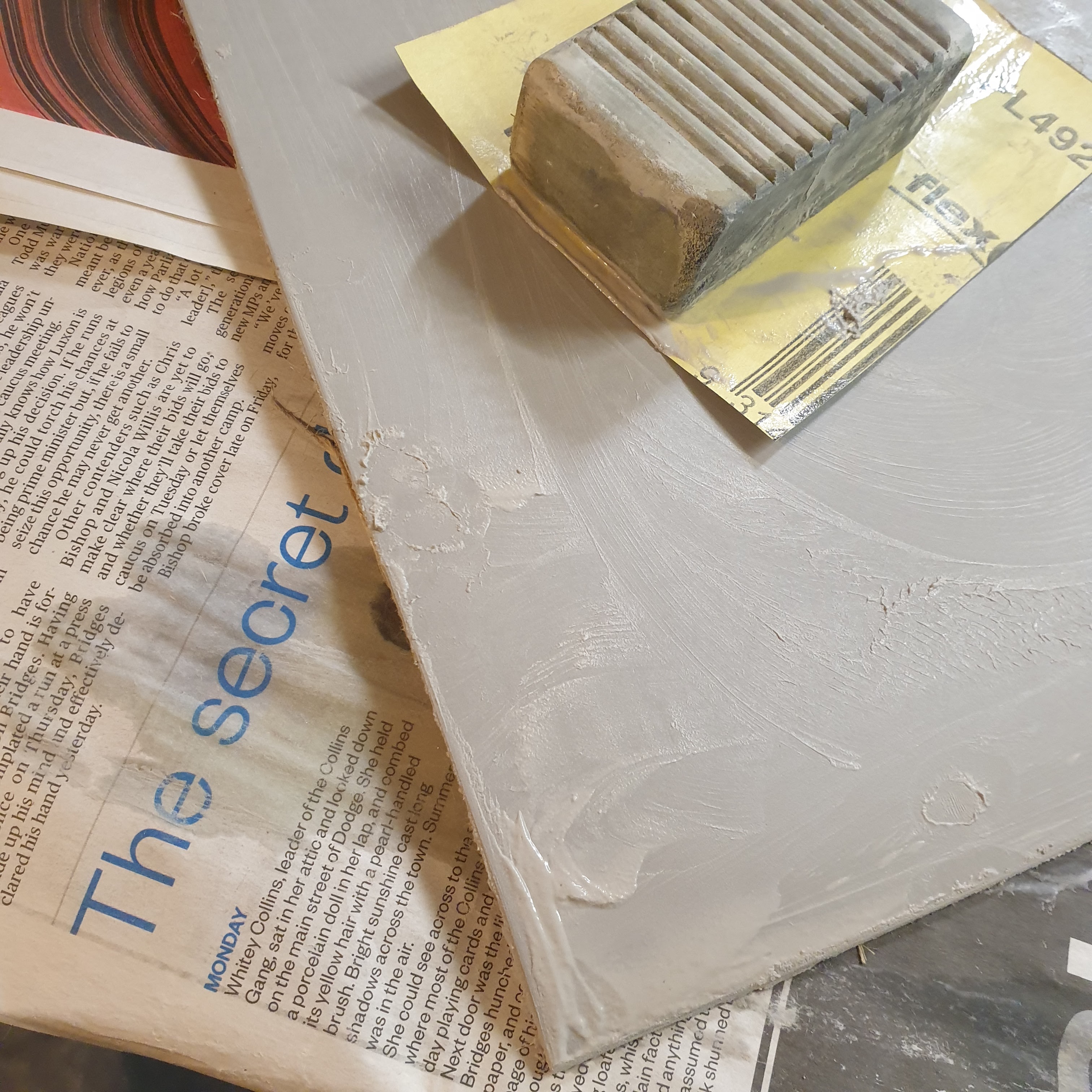
Preparations


Carving


Proofing


Colour mixing


Editioning
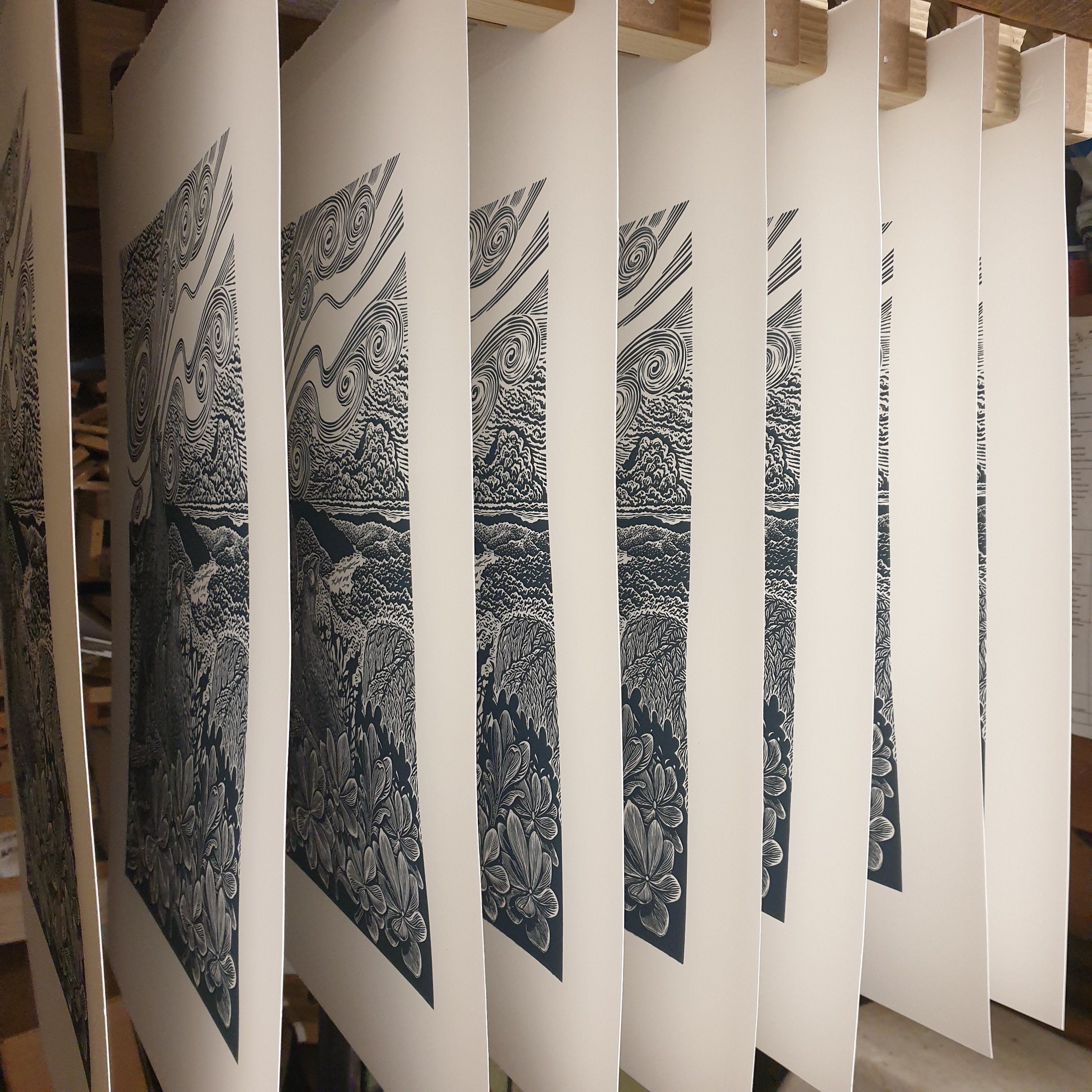


Colouring the Wattles


Signing


Framing


"Hope", Linocut, Limited edition print by Toni Hartill


"Hope"

Linocut
Edition of 15
Image size: A3, 297 x 420 mm
Paper size: A2, 420 x 594mm


Framed: $385
(A2 Natural Timber Frame)

Unframed: $235 
(Packaged in cello sleeve with backing board and mat.)


"Hope" will be available 
to purchase, framed and unframed at


Estuary Arts Centre, Orewa, 

5th September - 2 October, 2022

Opening event: Sat 10th September, 3-5pm


&


Auckland Botanic Gardens

21 October - 14 November, 2022


Or CONTACT me direct.

Many thanks for visiting!


For more information about kōkako visit: 

https://www.doc.govt.nz/nature/native-animals/birds/birds-a-z/kokako/ 

North Island kōkako recovery plan and how you can help.


Did you know?

"In Māori myth, the kōkako filled it's wattles with water and brought it to Maui as he fought the sun. Maui rewarded the bird by making it's legs long and slender, enabling it to bound through the forest with ease." 


https://www.stuff.co.nz/environment/83516376/pest-control-allows-pureora-kokako-to-flourish

Pest control allows Pureora kōkako to flourish.


Tuesday, 14 December 2021

"Where the Seabirds Go" opens at last!


Toni Hartill


I have a couple of small works in this exhibition, featuring the Buller's Albatross. Made quite some time ago, way back in May in fact, they are now hanging in the exhibition and able to be viewed along with all of the other wonderful works by local artists.


SCROLL DOWN to see the Making-of pics 
and the Completed Images..


"Where the Seabirds Go"
Estuary Arts Centre,
Orewa

14 Dec - 9 January
.
Opening event
18 Dec, 3-5pm

Bookings essential as numbers are limited:
 Email: Kim Boyd at manager@estuaryarts.org

Note: Under the new Covid-19 protection Framework 
Estuary Arts Centre can hold an event up to 100 people.

A Vaccination Pass is necessary.

Facemasks are encouraged.


"New Zealand is often called the "seabird capital of the world", 
yet since the 1950's seabirds numbers around our shores have 
declined by over 70%. This year over 30 artists 
are attempting to find out why."


This exhibition has been organised, tenaciously and expertly, by Val Cuthbert, rescheduling a number of times through our latest lengthy lockdown and now finally it is open to view!

Well worth a trip to the Hibiscus Coast to view works by over 30 local NZ artists.  


Milford Sound, NZ


Buller's Albatross

After MUCH dithering I chose to focus my research for this project on the plight of the Buller's Albatross (or Mollymawk). It wasn't an easy choice, however having had the opportunity to watch these stunning birds fly all around our boat as we motored a short way out of the entrance to Milford Sound earlier this year, it seemed like a sign! Pick me! So I did. My camera battery had long since died, due to excessive clicking by the time we got outside of the sound, so I have to make do with the images etched in my memory. And they are! So beautiful!


The Making Of

As is often the case, I had loose ideas of where I might be heading with with my image but I particularly wanted to focus on the threat that is posed to these, and many seabirds, by the fishing industry on their long migrations.

I began with the idea of probably using multiple blocks to create the image and a background. 


Toni Hartill

Toni Hartill

Toni Hartill


Trialling the use of a circular 2nd block


Toni Hartill

Toni Hartill

Toni Hartill

Toni Hartill

Toni Hartill

Toni Hartill

Toni Hartill


After MANY experiments  using different media I finally decided on how to create a soft background with the addition of  migrating birds using stencils and hand drawn flight paths using speedy and direct drawing on top of the prints. This took a fair bit of practice and a lot of "just go for it!" attitude to draw the lines smoothly and confidently. 

I attempted to channel the Karate Kid to get in the zone to not botch up the prints! As I wanted the edition of 10 prints to be consistent I had to practice the "moves" and be able to repeat it 10 times without error. There are slight variations, of course, in the drawing of the lines - I'm not a machine after all.


Toni Hartill

Toni Hartill


Toni Hartill


Of course, in the process of creating this image, the old grey matter got ticking about other ideas for backgrounds. Fossicking amongst my printed textures and sketchbooks I again experimented with possibilities.


Toni Hartill


Toni Hartill

Toni Hartill

Toni Hartill


In the process of experimenting with possible colours I began cutting out multiple birds and...


Toni Hartill


before I knew it, I had quite an audience...

Toni Hartill


which needed a way to help them stand up so they could offer their assistance - no small distraction. 


Toni Hartill


Back on task:

My speedy circle cutter - patent pending!


Toni Hartill


Toni Hartill


The final task with any project is ALWAYS to write up my notes 
so  that I know how I made these works for future reference.
No, I will never just remember.
Yes, my future self thanks me.

And yes, you should do  it too!


Toni Hartill


Stop Motion: cutting the lino block


Completed Images


Both these images are framed and exhibited at Estuary Arts Centre.

I am also including an unframed print of "Flight Interrupted" which will be available to purchase and take away during the exhibition.


(I've also included a couple of prints of of my recent linocut "A Cautious Reopening" - the continuing saga of my snails being released from lockdown, which are also available to take away, cash and carry.)


Toni Hartill

"Flight Interrupted"

Linocut, stencil, coloured pencil

Limited Edition of 10, variable.


Toni Hartill


"The Price of Fish"

Linocut, cut and layered


Statement:


Buller’s Mollymawks are one of  the smallest of the albatrosses and endemic to New Zealand.

The southern subspecies breeds on islands off the southern coasts of NZ such as Snares Island, Solander Islands and Chatham Islands. They are unusual in that they breed in dense woody vegetation which often requires a walk of up to 100m inland.  As annual breeders they usually return to the same nest site year after year with the same partner. After breeding the colonies are deserted and the birds migrate across the Pacific to seas off Chile and Peru.

Buller’s Mollymawks are commonly seen killed as a result of scavenging behind fishing boats, with demersal long-liners and trawling operations responsible for the majority of mortalities.


I hope, if you are able, you can get along to see the exhibition.

Reminder: you need to book your place to attend 

the opening on Saturday 18th, 3-5pm.

Email: Kim Boyd at manager@estuaryarts.org

Masks are encouraged.

Vax passes are required.


Thanks for stopping by!